
Why warehouse automation decisions are harder than ever in 2026
Jun 4th, 2026

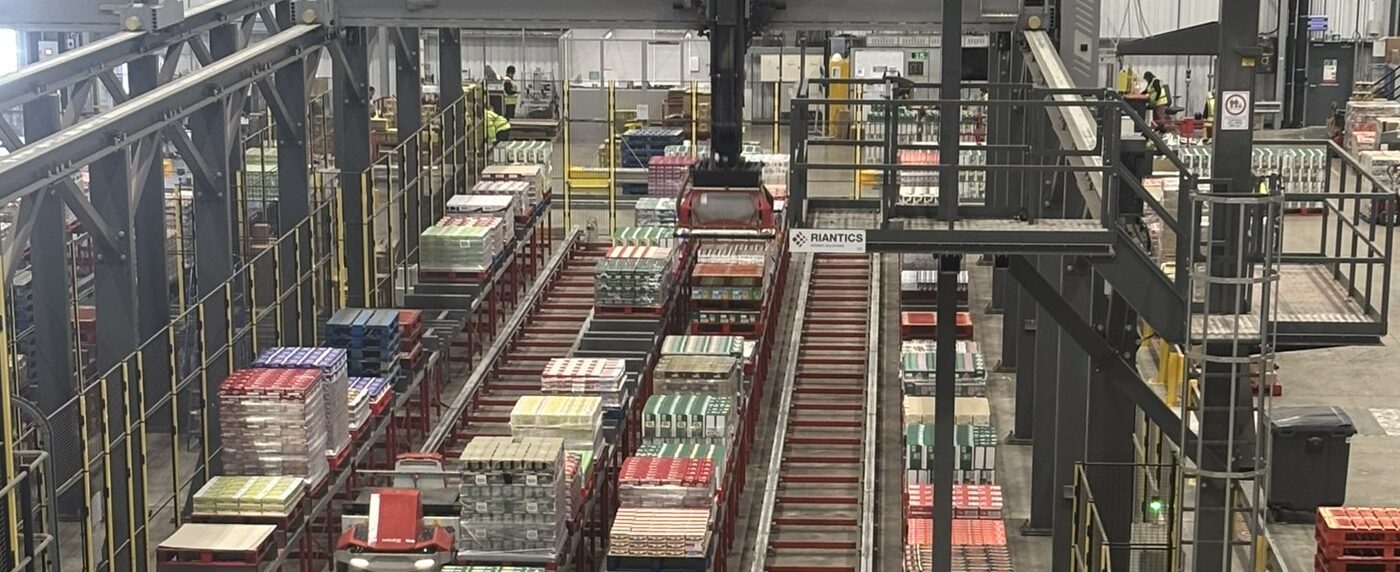
There was a time – not long ago – when warehouse automation felt like a straightforward upgrade. You identified a bottleneck, invested in a conveyor system or a fleet of mobile robots, and measured success in throughput gains and labour savings.
In 2026, that simplicity is gone. Today’s warehouse automation decisions are no longer just operational – they are strategic, technological, financial, and even philosophical. At Inteq, we see clients wrestling not with whether to automate, but with how far, how fast, and with whom. The stakes have risen, and so has the complexity – and increasingly, success depends on how well solutions are designed around the realities of each operation.
Too many choices, not enough clarity
The automation market has exploded. Autonomous mobile robots, goods-to-person systems, AI-driven orchestration layers, robotic picking arms, micro-fulfillment solutions – the options are vast and constantly evolving. But more choice doesn’t mean better decisions. It often leads to analysis paralysis – especially when technologies are evaluated in isolation rather than in the context of how a warehouse actually operates.
Many operations leaders are asking:
- Should we go all-in on a single vendor ecosystem or build a modular stack?
- Do we prioritise flexibility or maximum efficiency?
- Which technologies will still be relevant in five years?
There’s no universal answer anymore – only trade-offs. And those trade-offs can only be properly understood through detailed operational analysis, not product comparison.
Technology is moving faster than ROI models
Technology is advancing so quickly that traditional ROI models often struggle to keep pace. Systems that seem cutting-edge today can feel outdated before they are fully implemented, making long-term returns harder to predict. With rapid software updates, growing use of AI, and subscription-based pricing replacing large upfront investments, ROI is becoming less about certainty and more about informed estimates. As a result, businesses need to move beyond static business cases and use real operational data and scenario modelling to understand how technology is likely to perform in their specific environment.
Integration has become the real challenge
Buying automation is easy. Making it all work together is not.
Warehouses in 2026 are no longer isolated systems—they are deeply connected to order management platforms, transportation networks, real-time inventory systems and customer-facing delivery promises. Every new automation layer adds integration complexity. And unlike the past, failure doesn’t just slow operations – it impacts customer experience directly.
The question is no longer “Does this system work?” but “Does it work with everything else?” That’s why integration is no longer a technical afterthought—it’s a design discipline. Systems need to be architected holistically, with each component selected and configured as part of a wider, coordinated solution.
Labour isn’t just a cost – it’s a constraint
Automation used to be justified primarily by labour savings. That narrative has shifted.
In many regions, the issue isn’t cost – it’s availability, retention, and variability. Workforce expectations have changed and so have the nature of warehouse work. Automation decisions now must consider human-machine collaboration, ergonomics and safety, workforce adaptability and training/change management. In other words, automation isn’t replacing people—it’s reshaping how they fit into the system. Designing that balance requires a deep understanding of workflows on the ground. Without that, even the most advanced technology can create friction rather than efficiency.
Flexibility is now a core requirement
Demand volatility has redefined what “efficient” means. Static systems that maximise output under predictable conditions are giving way to flexible solutions that can adapt to seasonal spikes, SKU proliferation, e-commerce unpredictability and rapid shifts in consumer behaviour.
But flexibility comes at a cost – often in the form of lower peak efficiency or higher upfront investment. Choosing the right balance is one of the hardest decisions leaders face today – and one that depends heavily on accurately modelling future scenarios and designing systems that can evolve over time, rather than locking into rigid configurations.
Risk has become multi-dimensional
Automation projects now carry layered risks:
- Technological obsolescence
- Vendor dependency
- Cybersecurity vulnerabilities
- Implementation delays
- Operational disruption during transition
And perhaps most importantly: reputational risk. When fulfillment fails, customers notice immediately. This forces organisations to think beyond technical performance and consider resilience, scalability, and long-term support. Mitigating these risks increasingly comes down to how well a solution is engineered from the outset – how adaptable it is, how dependent it is on single vendors, and how effectively it has been stress-tested against real operational demands.
The decision is no longer just operational
Warehouse automation used to sit squarely within operations. In 2026, it’s a cross-functional decision involving Finance (investment models and risk), IT (integration and data architecture), HR (workforce impact) and Strategy (long-term competitiveness)
That means more stakeholders, more perspectives – and inevitably, more complexity. Aligning those perspectives requires more than technology selection. It requires a clear, data-driven understanding of how the operation works today and how it needs to perform tomorrow – translated into a solution that each function can support.
So, what’s the way forward?
If automation decisions are harder than ever, it’s not because the industry is failing – it’s because it’s maturing. At Inteq, we believe the organisations that succeed are those that:
- Start with clear operational outcomes, not technologies
- Base decisions on detailed analysis of real workflows and constraints
- Design bespoke solutions rather than forcing standard systems to fit
- Treat integration as a core capability, not an afterthought
- Align automation strategy with broader business goals
Most importantly, they accept that there is no “perfect” solution—only the right decision for their specific context.
Final thought
Warehouse automation in 2026 isn’t about chasing innovation for its own sake. It’s about making smarter, more informed decisions in an environment where the variables are constantly shifting. The challenge isn’t just choosing the right technology. It’s designing the right system around your operation—and choosing the right path forward.
These are exactly the challenges we’ll be tackling head on at the Inteq Customer Day on Wednesday 10th June 2026, where we’ll be bringing together industry leaders to explore how to navigate complexity, design smarter solutions, and make automation decisions with greater confidence.