
The automation advantage: why software-first is the only way forward
Jul 7th, 2026

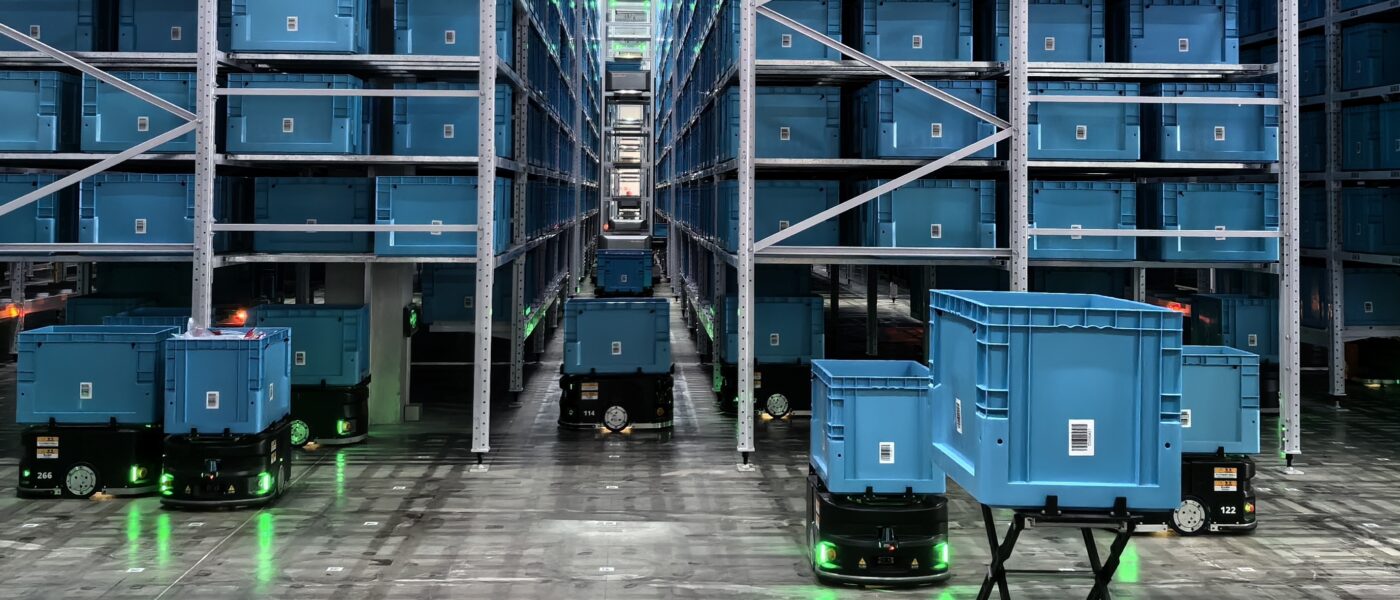
Warehouse automation is a critical opportunity to build resilience and reduce risk in the supply chain. It drives efficiency, performance and productivity. And for the organisations that get it right, it’s the heartbeat of a smarter, faster and more efficient business operation.
But with the pressure to deliver seamless, efficient customer experiences only mounting, the stakes for getting it wrong have never been higher. Those who don’t act, risk falling behind.
As such, warehouse automation has moved out of operations and into the boardroom. But without a software-first approach, it won’t get very far.
Automation is now a board-level decision
Fulfilment has moved up the agenda. Senior leaders are now driving automation decisions because the cost of falling behind has become harder to justify than the cost of investment. For most organisations, the real risk today is inaction.
Getting these decisions wrong has direct consequences for competitiveness, resilience, and customer experience. The question most organisations are asking is no longer whether to automate, but how fast and how far.
But keeping pace with fast-evolving technology can be difficult. Too often, organisations approach automation projects on a piecemeal basis, too focused on a specific process or piece of legacy hardware, rather than connecting investment to the wider business strategy. A software-first, hardware-agnostic model solves this by providing integration and flexibility from the outset.
Software is critical for successful warehouse performance
The software layer that orchestrates operations is the true differentiator in automated warehouses. Warehouse Execution Systems connect robotics, equipment and people into a unified control layer – giving operations teams real-time visibility and the ability to make faster, better decisions. That integration is where automation ROI is won or lost.
Crucially, not all automation is equal. Robotics offers flexibility and scalability that fixed systems can’t match. The key is starting small and scaling through a test-and-learn process, software integration designed in from day one, not added as a bolt-on. As technology keeps changing, the software layer is what allows an operation to evolve without starting from scratch each time.
AMRs are no longer experimental
Mobile robots are becoming standard warehouse infrastructure. Their value is clear: they mobilise quickly, work alongside people without major reconfiguration, and scale as demand grows. Robotics-as-a-Service models have also removed the capital barrier for organisations that previously couldn’t justify the upfront cost. What was once a significant financial commitment is now accessible to a much wider range of operations.
Pallet shuttle ASRS is gaining serious ground
As space gets tighter, labour harder to source, and throughput demands heavier, pallet shuttle Automated Storage and Retrieval Systems are becoming a foundational technology rather than a premium option.
When integrated with AMRs, conveyors, AGVs and robotic arms, they support end-to-end material handling across piece, case and full-pallet workflows – cutting footprint and reducing operating costs in parallel. For operations under pressure on multiple fronts, this kind of connected automation is increasingly the practical answer.
The shift from goods-to-person to goods-to-robot
Customer interest is moving in a clear direction: away from traditional goods-to-person systems and towards fully automated robotic pick cell architectures. These cells pick orders directly into shipping cartons, which then move automatically through packaging, high-speed sortation and palletisation. The result is an end-to-end fulfilment flow that runs 24/7 with minimal human involvement.
Beyond throughput and accuracy, customers are identifying structural cost benefits: less reliance on manual handling, reduced exposure to attrition and site-level overheads such as warehouse central charges. As labour volatility rises, this architecture is becoming a credible path to distribution operations that are scalable, cost-efficient and genuinely future-proof.
The evolution of warehouse operations is not slowing down. The organisations that will lead it are those that start with the software, build for integration and treat automation as a platform for growth – not a problem to solve once.
(Published in Automation Magazine – June 2026)