
Doing more with what you have: Future-proofing warehouse operations
Jun 17th, 2026

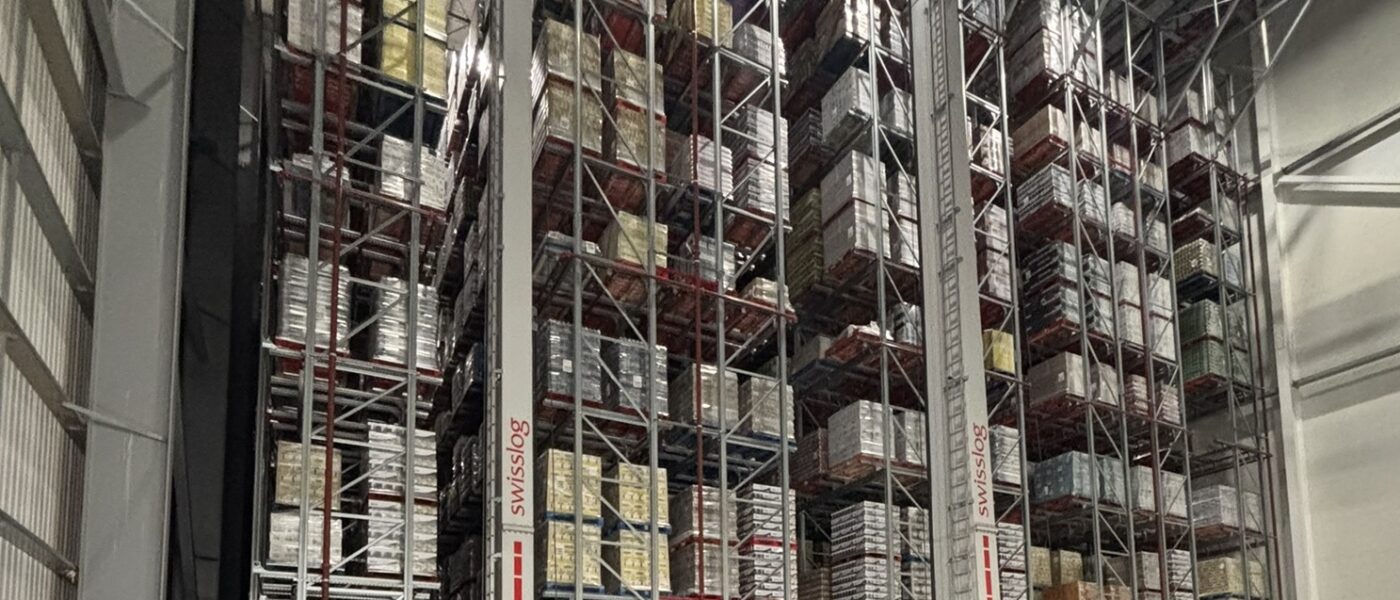
Today’s warehouse and distribution operations are under increasing pressure to do more with what they already have. Rising customer expectations, fluctuating demand patterns, labour challenges, and the need for greater operational efficiency mean that simply adding more space or resources is not always the answer.
Regardless of your operating model, the challenge remains the same: how can you maximise performance from your existing assets while maintaining the flexibility to adapt to changing business needs?
Different operations, shared challenges
While operational priorities may vary depending on the business model, organisations across the supply chain face common pressures.
Multi-site Networks: Optimising through consolidation and forward deployment
For businesses operating across multiple sites, the focus is often on creating a more connected and efficient network. This may involve consolidating operations to eliminate unnecessary complexity or implementing forward deployment strategies that position inventory closer to customers.
The objective is to improve service levels while reducing operational costs and making better use of existing facilities.
Single-site operations: Driving density and flexibility
Single-site operations are increasingly looking inward to identify opportunities to maximise storage density and operational flexibility.
This could include redesigning warehouse layouts, introducing automation technologies, or improving inventory management practices to increase throughput without expanding the physical footprint. The goal is to create an operation that can efficiently accommodate changing product profiles and demand patterns.
Multi-customer 3PLs: Maximising shared capacity
Third-party logistics providers face the additional complexity of balancing the needs of multiple customers within shared environments.
Success relies on maintaining flexibility across labour, space, and processes while ensuring high service standards for every client. Effective resource sharing and adaptable operational models are critical to achieving both efficiency and scalability.
The new operational priorities
Despite their differences, these operational models share several common objectives:
- Increase throughput to meet growing customer expectations
- Improve responsiveness to changing market demands
- Maximise the utilisation of existing assets and infrastructure
- Deliver greater efficiency without significant expansion investments
Achieving these outcomes requires a shift in thinking. Rather than relying solely on additional space, labour, or equipment, organisations must focus on optimising what they already have.
Building agile and adaptable operations
Future-ready operations are designed with agility in mind. They have the capability to respond quickly to changing business conditions while maintaining efficiency and service performance.
This may involve leveraging data and analytics to improve decision-making, implementing scalable technologies, redesigning operational processes, or adopting more flexible approaches to resource allocation.
The organisations that succeed will be those that continuously seek opportunities to unlock additional value from their existing operations.
Continuing the conversation
These themes were a key topic of discussion at the recent Inteq Customer Day, where industry experts explored practical strategies for future-proofing warehouse operations across a range of operating environments.
As supply chains continue to evolve, the ability to do more with existing resources will become an increasingly important competitive advantage.
If you are exploring ways to improve efficiency, increase flexibility, and maximise the performance of your current operation, we’d welcome the opportunity to discuss how your business can prepare for the challenges and opportunities ahead.
Contact us today to continue the conversation.