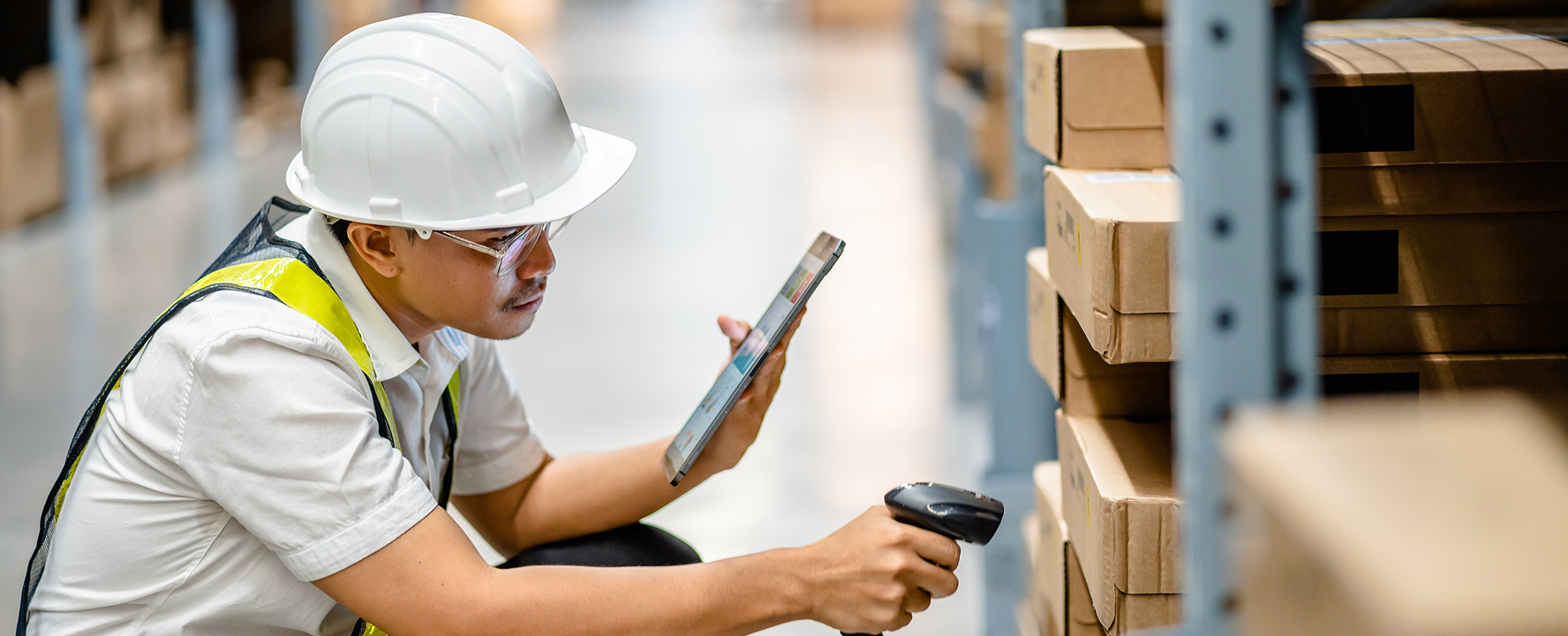
Why software-first thinking will define the next era of retail automation

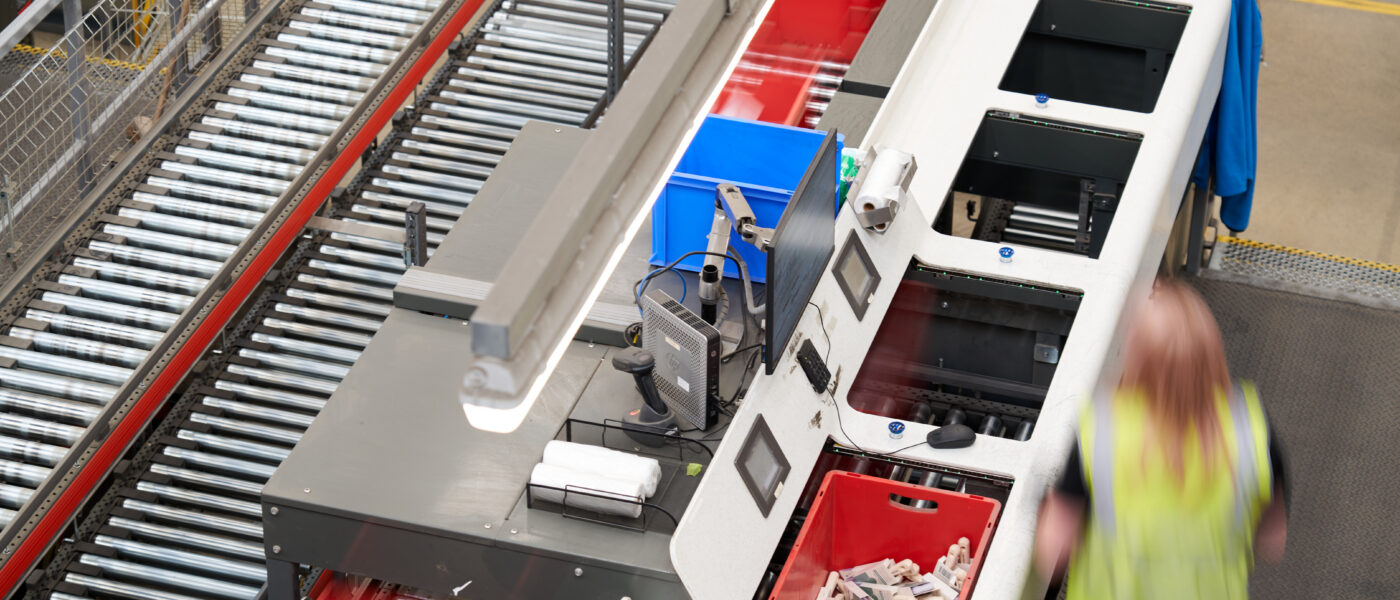
As the industry moves into 2026, retail warehouses are carrying forward persistent pressures. Costs are showing no sign of slowing, the availability of skilled labour remains challenging, and customer expectations are escalating at pace. As a result, many retailers are struggling to keep up.
Inteq’s latest research highlights how fulfilment has become a major barrier to growth. More than half of retailers (56%) say their existing fulfilment operations have held back their growth with 58% reporting this having a direct negative impact on their ability to serve customers well.
In an increasingly volatile market, automation is no longer a ‘nice to have’ but a critical lever for resilience, scalability and competitive advantage, it’s crucial that automation is done right for retailers to unlock growth in 2026 and beyond.
Fulfilment has become the frontline of competition
For today’s consumers, the delivery experience increasingly outweighs traditional brand loyalty, with more than half (53%) of consumers saying they wouldn’t shop with a retailer again after receiving the wrong item.
This shift places greater pressure on warehouse operations. Seasonal peaks are sharper, demand patterns are less predictable, and the margin for error is shrinking. At the same time, retailers are grappling with rising labour costs, high staff turnover and ongoing recruitment challenges.
It’s therefore unsurprising that almost nine in ten (87%) retail and eCommerce leaders believe robotics and automation would improve their fulfilment operations. Yet despite this recognition, progress often stalls due to automation being viewed through the wrong lens.
Automation isn’t a quick fix but a strategic foundation
Many retailers still approach automation reactively, deploying technology to solve isolated challenges such as labour shortages or capacity constraints in returns processing. While these interventions can deliver short-term relief, they rarely unlock sustained, long-term value.
As technologies evolve at speed, real competitive advantage comes from embedding automation into the wider business strategy from day one. This requires a software-first approach – one that brings together people, technology and intelligence to deliver measurable business outcomes.
Piecemeal automation creates fragmentation and limits impact. True success comes from bespoke solutions that blend multiple hardware technologies, scale up and down with demand, and evolve as new innovations emerge.
Crucially, this approach recognises that automation is not about replacing people, but about enabling them to perform at their best.
Why software-first thinking unlocks true automation value
Four in five (80%) of retailers believe outsourcing fulfilment and logistics functions would make them more agile, underlining just how critical flexibility and interoperability have become. Yet automation only delivers on this promise when software sits at the centre.
A software-first strategy allows technology to evolve alongside the business — adapting to changing operational needs without locking retailers into rigid systems or single providers. As new technologies emerge, this flexibility becomes a decisive competitive advantage.
This is the Integration Dividend: placing software at the core to enable seamless connectivity, faster scaling and long-term performance gains. Achieving it requires early collaboration with IT teams, ensuring integration is designed in from the outset rather than bolted on later.
Skipping integration may appear faster in the short term, but it inevitably introduces risk, complexity and rising costs over time. By contrast, a software-first foundation supports sustained, scalable and accurate performance — both now and in the future.
Inteq’s software unlocks measurable gains and competitive advantages for customers
For some retailers, automation is no longer a future ambition – it is already delivering tangible results.
Nearly seven in ten retailers report seeing benefits from robotics and automation within a year, including improved efficiency (41%), scalability (28%) and accuracy (26%) – all critical metrics in a competitive market.
Inteq’s work with a leading retail brand and its third-party logistics partner demonstrates what is possible when automation is deployed strategically. By implementing semi-automated systems powered by Inteq Warehousing Software (IWS), throughput increased by 55%, enabling 2,500 items per hour.
These gains were driven by intelligent integration – aligning software, automation and operational design to meet specific business needs.
A further example comes from one of the world’s fastest-growing brands. Through a two-year modernisation programme, Inteq partnered closely with the retailer to transform fulfilment operations across Europe and North America.
Advanced mobile robotics enabled goods-to-person picking and automated replenishment, delivered through a flexible, high-performance system designed to scale with demand. Inteq also provided tailored maintenance, permanent on-site support in Europe and coordinated servicing in North America to minimise disruption.
Over the two-year programme, this approach delivered a 495% uplift in picking efficiency and a 300% uplift in packing and replenishment – equivalent to 6x and 3x throughput respectively – enabled by the intelligent integration of software, automation and operational design.
Retailers cannot afford to delay
As we begin a new year, the message for retailers is clear: automation is no longer optional. Automation projects take time to plan, implement and refine but those who wait until pressure peaks will be forced into making rushed and reactive decisions, which often come at a higher cost and with greater disruption.
With competitive pressures rising, the gap between manual and automated operations will only continue to widen. By adopting a software-first strategy, retailers that invest now will unlock efficiency, improve accuracy and future-proof their supply chains. Whereas those that delay will be left struggling to keep pace with competitors who can fulfil faster, more accurately and more reliably.
Those who lay the right foundations now, will pave the way for success, tomorrow.
To understand what your automation should be delivering, Inteq can help.
Published in Retail Technology Review magazine in February 2026.
Discover what we can do for you today.
Using our powerful, in-house software design capabilities we can deliver the performance gains you are looking for in your packing operations. Automating part or all stages of your packing process has never been more straightforward.
Contact us