
Logistics trends for 2026: mobile robots go mainstream
Apr 22nd, 2026

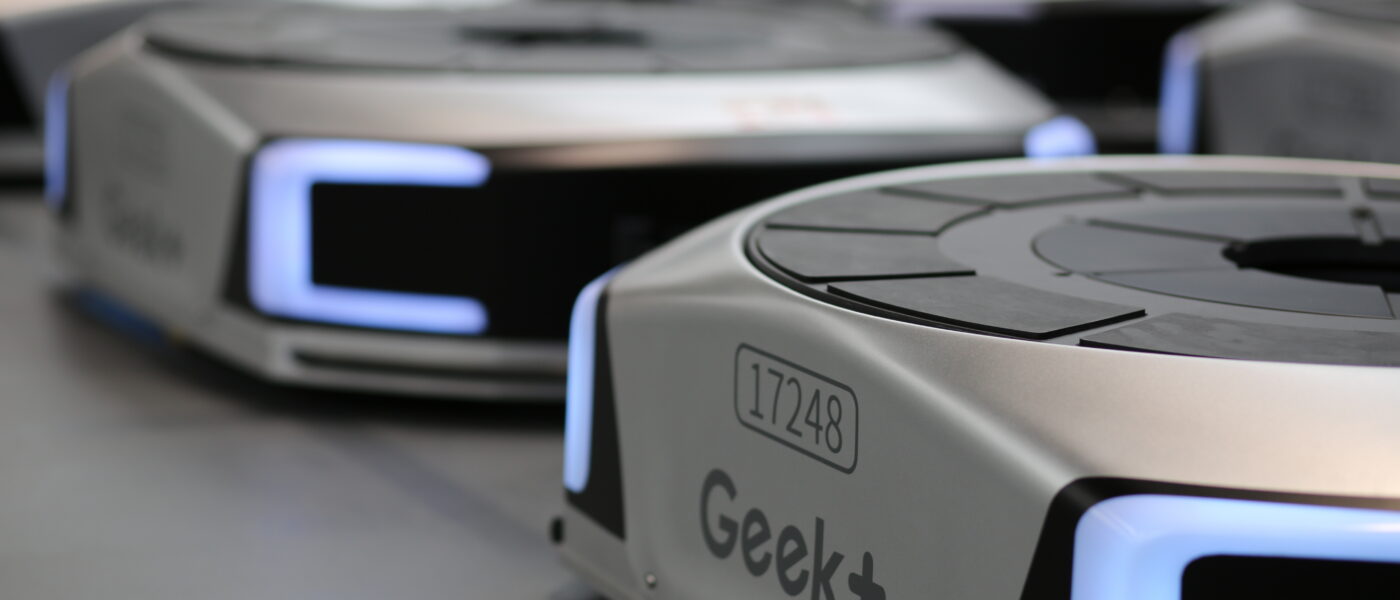
In 2026, Autonomous Mobile Robots (AMRs) are expected to become standard elements of warehouse infrastructure. For many logistics operations, AMRs have moved beyond the pilot stage to become a key enabler of consistent and scalable supply chain performance.
Increasingly, AMRs are the default choice for warehouses advancing automation. They are relatively easy to deploy and scale, safe to operate alongside people and can integrate with existing warehouse environments with minimal layout changes.
There are a number of technology upgrades and deployment initiatives driving the adoption of robotics across warehouse and logistics operations:
- AMRs replacing traditional Automated Guided Vehicles (AGVs) for internal transport.
- Robotic palletising and de-palletising to improve throughput and reduce manual strain.
- AI-enabled vision systems are being integrated into receiving, inspection and sorting processes, allowing facilities to automate quality checks, product identification and routing with greater accuracy.
- Flexible deployment models such as Robotics-as-a-Service (RaaS) and subscription pricing, making fleets accessible without significant upfront capital investment.
From experimental to essential
Today, new warehouse facilities are being designed with robotics in mind from day one. Established sites are also planning regular ‘robotics capacity’ upgrades, much like scheduled improvements to racking, conveyors or other core infrastructure.
Success will increasingly depend on connected automation across every stage of the operation – from goods-in to storage, picking, pallet building and inspection. These modular systems can be deployed in phases and easily re-tasked as operations evolve.
The agility, safety and modularity of AMRs align with the industry’s broader shift toward flexible, reconfigurable automation systems that help businesses adapt to fluctuating order volumes, evolving product ranges and changing fulfilment patterns.
Robotics reduces risk
While automation was once considered an investment risk, it is increasingly being adopted to mitigate operational risk. Industries such as grocery, cold chain logistics, pharmaceuticals and healthcare are particularly susceptible to labour shortages and strict compliance requirements. In these environments, maintaining consistent operational capacity can be challenging.
Robotics provides a predictable and reliable way to manage labour volatility, helping organisations manage while maintaining smooth, compliant operations.
Far from acting as a labour replacement, robotics enhances human work, ensuring that goods keep moving even when staffing fluctuates and eliminating a critical single point of failure in fulfilment: stalled movement.
Orchestrated, not isolated
To unlock their full potential, AMRs must operate as part of a coordinated warehouse ecosystem. Without the right integration strategy and orchestration software, even the most advanced robotics will struggle to deliver on expected ROI.
Successful implementation depends on the right systems in place to coordinate AMRs with other automation technologies effectively. Beyond technology, businesses also need technicians, supervisors and operators capable of managing a robotic fleet. This makes intuitive interfaces and streamlined workflows essential for fast, smooth adoption.
When properly integrated, AMRs move, adapt and scale in sync with the wider business, bolster the human workforce, enable stronger governance, reduce administrative burden and facilitate cross-functional collaboration.
Deploying AMRs without properly integrating them into a Warehouse Execution System (WES) limits capacity and increases the risk of missing expected ROI. Robotics deliver the greatest value when managed through a robust control layer.
Inteq’s integration solution, Inteq Warehousing Software (IWS) is a software-first, hardware-agnostic platform that unifies warehouse control, management and execution – acting as the ‘nervous system’ of an automated warehouse.
Looking ahead to 2026
Automation is ultimately about building resilience in an increasingly volatile global market. Leading organisations will develop the capability to operate at pace, reliably fulfil promises and scale without friction, while those that fall behind will find it increasingly difficult to close the gap.
With AMRs, success will be defined not by the number of robots deployed, but by how effectively organisations integrate, orchestrate and govern their automation systems.
Looking to automate your warehouse in 2026? Get in touch to take control of your operations.