
Logistic trends for 2026: automation as a key differentiator
Apr 9th, 2026

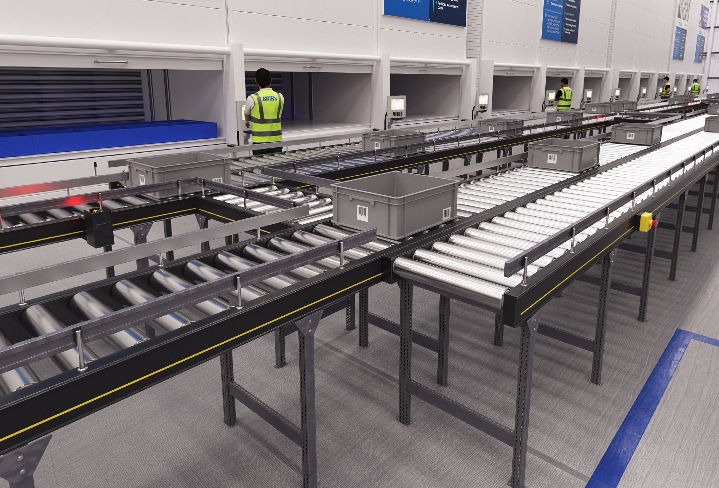
Throughout 2025, warehouse automation redefined how organisations scale. As we move further into 2026, businesses are increasingly recognising automation not just as an efficiency tool but as a strategic asset that underpins growth, resilience and competitiveness.
As product ranges grow and delivery expectations rise, businesses need flexible, scalable automation that evolves with operations, rather than constrains them. This shift has changed how automation is perceived – no longer is automation just seen as a tool for improving efficiency and reducing the administrative burden. Today, it’s seen as the critical link between fulfilment capability and improved customer experiences, stronger brand reputation and sustained market differentiation.
The automation risk has shifted – the real risk is being left behind
The emergence of flexible automation solutions means there is far less fear around making the wrong investment or committing to a set up that cannot adapt to future requirements. As a result, the risk has shifted. Automation is no longer considered a high-risk investment, instead, the greater risk is not automating. Those that don’t adapt quickly face the possibility of being left behind, and the longer they wait, the harder it becomes to catch up to those that automated earlier.
Reflecting this shift, we’ve seen that the appetite for automation is no longer confined to operations teams. Decisions about automation are increasingly being made at board level. Senior leaders are recognising that automated fulfilment is no longer a ‘nice to have’, it’s a strategic necessity and key growth enabler, forming a critical future-proofing strategy.
Value across industries as complexity increases
Businesses across multiple sectors can achieve significant gains wherever complexity is increasing:
- e-commerce and retail: improved service levels and consistency, even during peak demand.
- Third party logistics providers: scalable capacity without incurring additional costs each time a new client is onboarded.
- Grocery, food distribution and cold chain operations: reduced dependence on labour in environments where staffing is often hardest to retain.
- Pharmaceutical and healthcare sectors: high requirements for accuracy, control and traceability, make automation a strong fit.
- Manufacturing: consistent material flow – automation eliminates single points of failure.
Implementing resilient, scalable automation solutions that grow with your business
Investing in automation now strengthens supply chain resilience, expanding operational capabilities and builds a lasting competitive advantage over time. Implementation doesn’t require a significant upfront investment – you can start small and scale as your business grows.
Although before diving in, it’s important to get the foundations right. The key to successful automation lies in a software-first approach. When systems aren’t designed to integrate from the start, complexity increases and failures occur. Aligning software, equipment and operational processes from day one ensures automation evolves smoothly in step with market demands and business goals without disruption.
Automation also requires ongoing approach, rather than a set it and forget it mindset. In a fast-moving environment of evolving technology standards, regulatory compliance and cyber threats, keeping automation current is critical. Continuous updates, patches and optimisations, paired with seamless integration of new software releases and security protocols, ensure your systems remain efficiency, secure and future ready.
Case study: Building an intelligent, automated warehouse for a leading industrial products distributor
Discover how Inteq helped ERIK’s future-proof its logistics network through fulfilment consolidation, automation, and scalability. We reduced pick times by 30% and increased productivity by 110%, achieving near-perfect accuracy and enabling next-day delivery.
Looking ahead to 2026
In 2026, warehouse automation is moving beyond efficiency gains to become a true competitive differentiator. With flexible, scalable solutions now accessible across industries, automation is no longer a future ambition – it’s a future-proofing strategy.
Looking to transform your warehouse automation strategy in 2026? Get in touch to turn challenge into capability.