Does the 2026 UK Autumn Budget make now the right time to invest in warehouse automation?
Nov 2nd, 2026

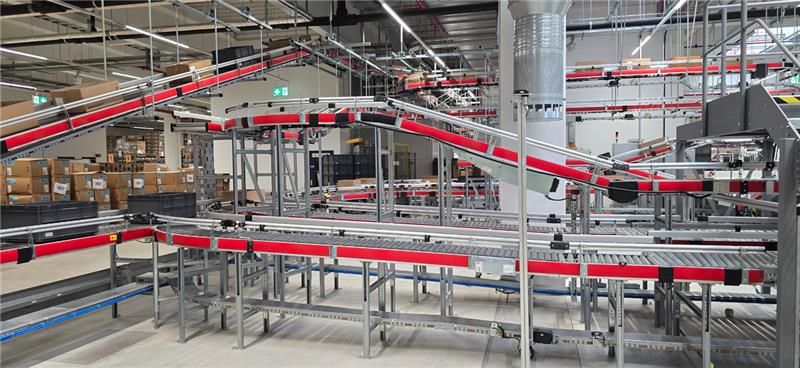
The Chancellor’s 2026 Autumn Budget has given businesses plenty to think about when it comes to investment, productivity and managing operating costs. For companies running warehouses and distribution centres, the announcements raise an important question: is now the right time to rethink how their operations work?
With changes to capital allowances, further increases in the National Living Wage and continued emphasis on business productivity, the financial and commercial case for warehouse automation deserves another look.
For businesses already considering automation, these measures could influence investment decisions. For those relying on ageing infrastructure, manual processes or increasingly stretched warehouse capacity, they provide another reason to consider what needs to change.
But the decision to automate should never be driven by tax incentives alone. It needs to start with a clear understanding of the operational challenges, the business objectives and the long-term return on investment.
Making automation investment more attractive
One of the most significant Budget announcements for businesses considering automation is the increase in the main rate First Year Allowance (FYA) from 40% to 50%, effective from 1 January 2027.
This provides a greater upfront tax deduction for qualifying expenditure on new plant and machinery that would otherwise only qualify for writing-down allowances. Existing full expensing and the £1 million Annual Investment Allowance will also remain available for qualifying investments.
For businesses investing in material handling equipment, robotics, conveyors and automated storage systems, this could make a difference to the financial modelling of a project.
The benefit will depend on the type of investment, how assets are acquired and the company’s tax position. It is important to understand which elements of an automation project qualify, and which allowances offer the greatest benefit.
However, the wider message is positive. The Government is maintaining incentives for capital investment, recognising the importance of businesses investing in technology, equipment and productivity to support economic growth.
Rising labour costs make productivity even more important
The Budget also confirmed a 3.9% increase in the National Living Wage to £13.21 per hour from April 2027.
For warehouse and distribution businesses employing large operational teams, this adds further pressure to already significant labour costs. When employer National Insurance, pension contributions, recruitment, training, overtime and staff turnover are factored in, the true cost of maintaining a workforce is considerably higher.
This is particularly challenging for businesses operating across multiple shifts or experiencing seasonal peaks, where maintaining the right number of people with the right skills can be difficult.
Automation offers an opportunity to address some of these pressures by improving throughput, reducing repetitive manual tasks and making better use of existing resources.
That doesn’t mean replacing people with machines. It means designing operations where people and technology work together effectively.
Robotics can take on repetitive movements and transportation tasks, while automated storage and picking technologies can improve accuracy, consistency and productivity. Employees can then focus on activities that require experience, judgement and problem-solving.
The commercial question is not simply how much labour automation can remove, but how much additional capacity and productivity it can create from the resources a business already has.
Do you need a bigger warehouse, or a smarter one?
Increasing warehouse costs, limited space and growing customer expectations are forcing many businesses to reconsider their existing facilities.
Expanding into a larger building or opening another distribution centre can involve substantial capital expenditure, additional property costs and greater operational complexity.
But before committing to more space, businesses should look at how effectively they are using what they already have.
High-density automated storage, shuttle systems, goods-to-person picking and intelligent warehouse control can help unlock additional capacity within an existing footprint.
The right solution can increase storage density, improve stock accessibility, reduce unnecessary movement and increase throughput without necessarily requiring additional floor space.
This is where a properly designed automation strategy can deliver value beyond the immediate labour savings.
It can help businesses accommodate growth, improve service levels and create greater flexibility to respond to changing customer demand.
Technology is only part of the investment
One of the mistakes businesses can make when considering automation is focusing too heavily on the physical equipment. Robots, conveyors and automated storage systems are important, but they need to work together as part of a connected operation.
Software is what brings the different technologies together, managing workflows, controlling movements, coordinating equipment and providing the visibility needed to make informed operational decisions.
A software-first approach also gives businesses greater flexibility when selecting technology. Rather than being restricted to a single equipment manufacturer, they can consider the technologies that best suit their operational requirements.
Integration with existing WMS, ERP and host systems is equally important. An automated warehouse needs to communicate effectively with the wider business, providing accurate information and maintaining the flow of orders and inventory.
This is why the choice of integration partner matters. The long-term value comes from how well the entire system performs, not simply the specification of individual machines.
Think beyond the initial return on investment
A warehouse automation business case should never stop at the initial capital cost or the projected payback period. Businesses need to consider the total cost of ownership over the lifetime of the system, including software, integration, maintenance, support, upgrades and future changes to operational requirements.
Ageing technology is another important consideration. Legacy warehouse control systems, unsupported software and obsolete PLCs can introduce operational risk, increase maintenance costs and make future improvements more difficult.
Investing in modern, flexible technology can help reduce these risks and provide a platform for future development.
It is also important to consider scalability. Can the system accommodate increased volumes? Can additional automation technologies be introduced? Will it support new customer requirements or changes to the supply chain?
These questions are just as important as the initial return on investment.
Turning Budget announcements into business opportunities
The 2026 Autumn Budget reinforces the importance of investment, productivity and business efficiency. For warehouse operators, the changes to capital allowances and further increases in employment costs provide a timely opportunity to revisit existing automation plans.
But businesses should avoid rushing into investment simply to take advantage of a tax incentive.
The starting point should always be the operational challenge. Where are the bottlenecks? What is limiting throughput? Are existing systems approaching obsolescence? Could additional capacity be created without expanding the building? And what will the business need from its warehouse operation over the next five to ten years?
At Inteq, we believe successful automation starts with understanding the business, not selling a particular piece of technology.
Our approach combines software, integration, controls and hardware to design solutions around each customer’s requirements. We work with businesses to identify opportunities, make the most of existing infrastructure and develop automation strategies that can evolve as their operations grow.
“As I see it, the biggest opportunity is not simply to invest in more automation. It is to invest in the right automation, for the right reasons, with a clear understanding of the value it will deliver over the long term. The Budget may provide an additional incentive, but the real return comes from building a more productive, resilient and adaptable warehouse operation.”
Jon Roberts, Sales Director, Inteq